
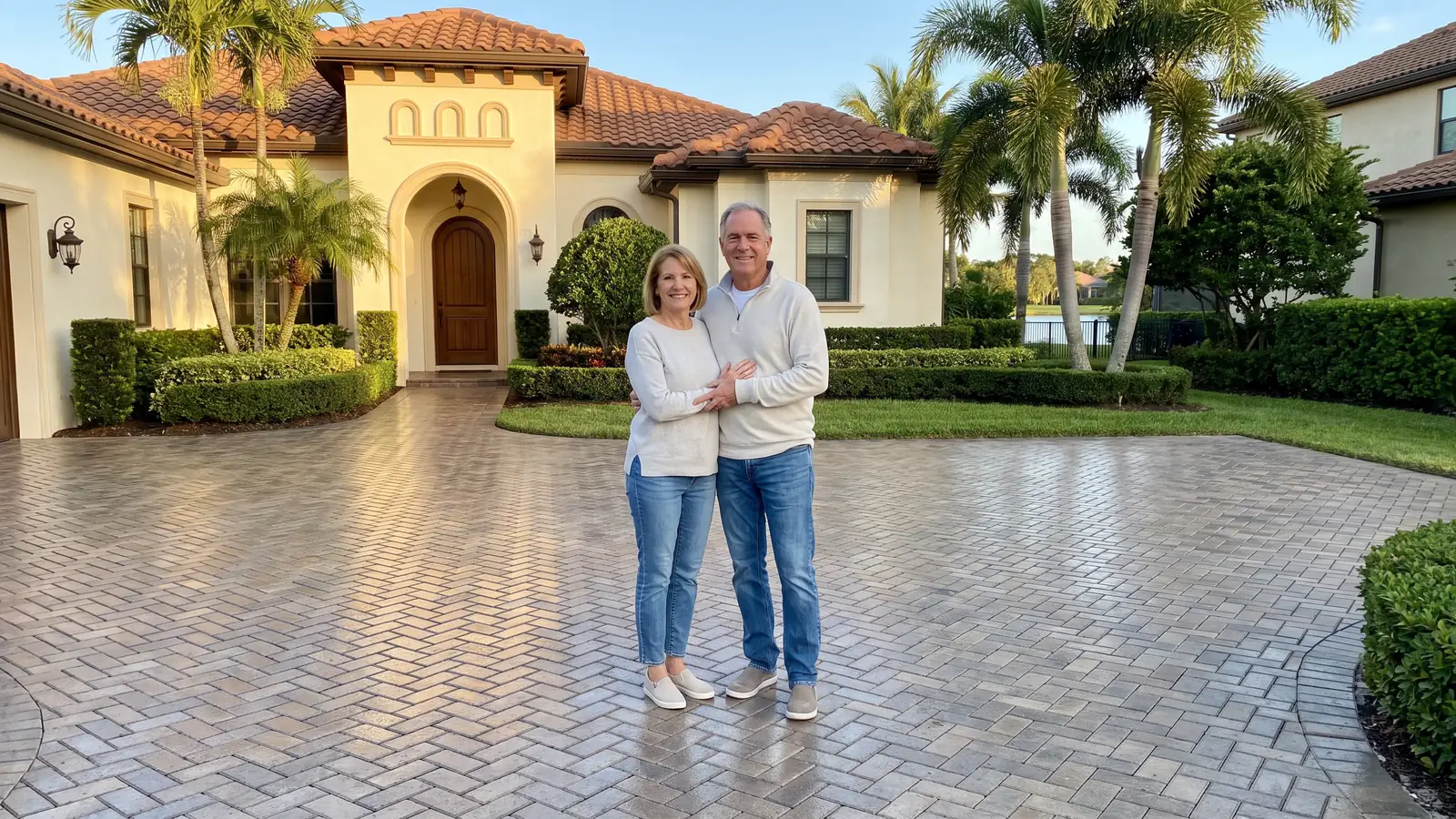
Paver sealing for Pine Castle homes
Paver Sealing in Pine Castle, FL
Pine Castle's older streets near Orange Avenue get paver sealing and a free estimate when you call (689) 285-2720.
- Brings out deeper paver color
- Fresh joint sand helps lock pavers in place
- Gives weeds less room to grow
- Makes the surface easier to keep clean
- Free estimate, no obligation
Request a Free Estimate
Free, no obligation.
Fast, careful paver sealing in Pine Castle
Paver sealing is available across Pine Castle, and the estimate is free. A local contractor washes, re-sands and seals driveways, patios and walkways, from the streets along Orange Avenue to those near the SunRail station. A call to (689) 285-2720 gets an answer within 1 business day, usually much sooner.
Picture a front walk that has faded to chalk, with weeds in the corners and sand missing from the joints. Once it is cleaned, re-sanded and sealed, it takes on one steady color again. If you want to describe what you see first, book your free estimate.
Why hire a local paver sealing contractor in Pine Castle?
Pine Castle was settled in 1870, so a good number of lots here hold pavers that have had several owners and several coats. A local contractor asks about that history before choosing a sealer, so call (689) 285-2720.
A free look
The contractor measures your Pine Castle pavers at no charge. You hear the price before any day is picked.
A range to hold bids against
Compare every bid with the posted Central Florida range of $1.50 to $3.00 per square foot for the wash, sand and seal.
Care with older work
If a past owner sealed your pavers, the contractor checks what is on them first. A water-based coat cannot go over a solvent-based one.
Free to say no
You choose the finish and the day, and an estimate in Pine Castle never obliges you to hire anyone.
Get Your Free Estimate in Pine Castle
Tell us about your pavers in Pine Castle.
Free, no obligation
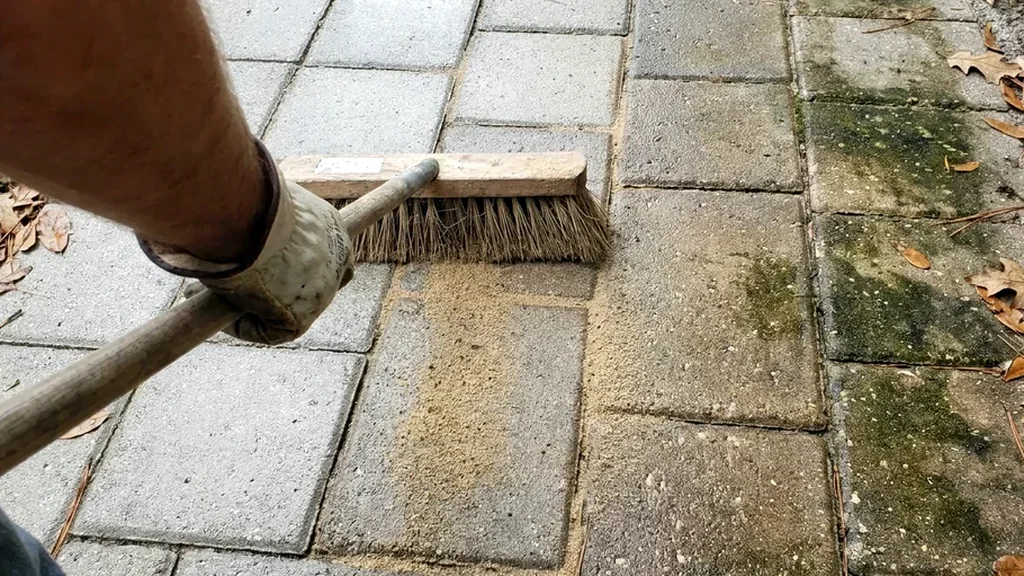
What paver problems show up most in Pine Castle?
Pavers sealed by earlier owners
Pine Castle was settled in 1870 and incorporated in 1925. Today it has 3,994 homes, some from long ago and some added since 2000, when the count was 3,302. Pavers on the older lots may have been sealed more than once, and not always with the same product. A water-based sealer cannot go over a solvent-based one, so the contractor has to find out what is there. Ask a neighbor who has lived here a long time. Long-time residents often remember who laid a drive and what went on it. Lots on the older streets may have been paved, patched and re-paved over many years. A drive that changes color halfway along is often a reset section from a past repair.
Chalky color in full sun
Orlando summer highs sit in the low 90s, and the area sees 90 degrees or more from about April 9 to October 14. South-facing drives weather faster than shaded patios, says a Central Florida company. Flat, chalky color after a rinse is one of the signs it lists that a reseal is due. Look at the sunniest strip of your drive first. That strip tells you how the rest of the surface will look in a year or two, and it is where the next coat will wear out first. A south-facing front walk with no tree cover is the clearest test. Compare its color with a shaded side yard to see how much sun has taken. Notice how the color looks under a carport or a tree and compare it with the open drive. The difference shows how much the sun has taken, and it tells the contractor how to match the new coat.
Weeds and ants in aging joints
A Jacksonville company says unsealed pavers lose joint sand, and then weeds, ants and dark mildew can take hold. In a place with old streets and many aging walks, hollow joints are common. Pulling weeds only clears the top. Fresh sand and sealer hold the joints full so the problem does not restart. Ant nests under a walk are a sign that the sand beneath has already thinned, so mention them at the estimate. Weeds that return within weeks of pulling are a sign the sand under the surface is gone, not just the top of the joint. Ant mounds along a walk are one more sign. They mean the sand under the surface has thinned enough for insects to dig, so the fix goes below the top of the joint.
Oil and tire marks that will not rinse out
The same Jacksonville company notes that oil and tire marks are harder to remove from unsealed pavers. A Pine Castle drive that has gone years without a coat can hold stains that a quick rinse will not lift. Sealer gives a surface that is easier to clean in the future. Point out dark patches at the estimate. Some stains rinse out and some do not, and a good contractor tells you which before you decide. A garage apron takes the most oil, so check there first. A drive that has held parked cars for years may show dark shapes where oil dripped. Those shapes tell the contractor where to pretreat before the wash.
Overspray and iron in the water
Iron is common in Florida well water, and University of Florida extension says iron-rich irrigation water leaves orange streaks. A Central Florida company says sprinkler overspray can also stain edges and speed wear. Check where your heads spray. Stains need treatment before sealing, since the coat would trap them. If one corner of the drive is orange and the rest is clean, the sprinkler spray pattern is the likely cause. Walk the property after the sprinklers run and see where the water lands. Marks from irrigation tend to repeat in a fan, so check the lawn edge too. Moving a head a few inches can stop them.
Which parts of Pine Castle does paver sealing cover?
Jobs are open across Pine Castle, from the streets along Orange Avenue to those near Sand Lake Road. SunRail's Sand Lake Road station sits at 8030 South Orange Avenue and serves Pine Castle, Sky Lake, Belle Isle and Taft. Tell the contractor which of those areas is closest when you book your free estimate. Coverage is checked by street.
Pine Castle went from a town in 1925 back to unincorporated status, and its school dates to 1877. Lots with that much past often hold pavers laid in different years. Walk your property and mark which sections look newer, then call (689) 285-2720 and describe them. Photos help the contractor plan.
Since 1973 the Pine Castle Pioneer Days festival has drawn families for crafts and a parade. Neighbors who care about the town's past often care about how their streets look today. If you plan to host guests, ask for a date well ahead of the event, and book your free estimate. Drying time means the work should end days before the party.
What does paver sealing cost in Pine Castle?
Companies across Central Florida commonly publish $1.50 to $3.00 per square foot for cleaning, sanding and sealing. With 3,994 homes packed into 2.69 square miles, many Pine Castle jobs are a front drive and a walk. Your free estimate turns the range into a total, so book your free estimate.
Two things move a Pine Castle quote most: leftover old sealer and joints that have emptied out. A peeling coat takes longer to prepare, and wide open joints take more sand. Call (689) 285-2720 and describe what you see.
| Paved area | Typical example | Clean, sand and seal |
|---|---|---|
| 300 sq ft | Small patio or walkway | $450 to $900 |
| 600 sq ft | Two car driveway | $900 to $1,800 |
| 1,000 sq ft | Large driveway or pool deck | $1,500 to $3,000 |
| 1,500 sq ft | Driveway plus pool deck | $2,250 to $4,500 |
Math based on the $1.50 to $3.00 per square foot that Central Florida paver companies published as of November 2026. Your contractor sets the actual price after seeing the surface. Repairs, leveling and stripping failed sealer are usually extra.
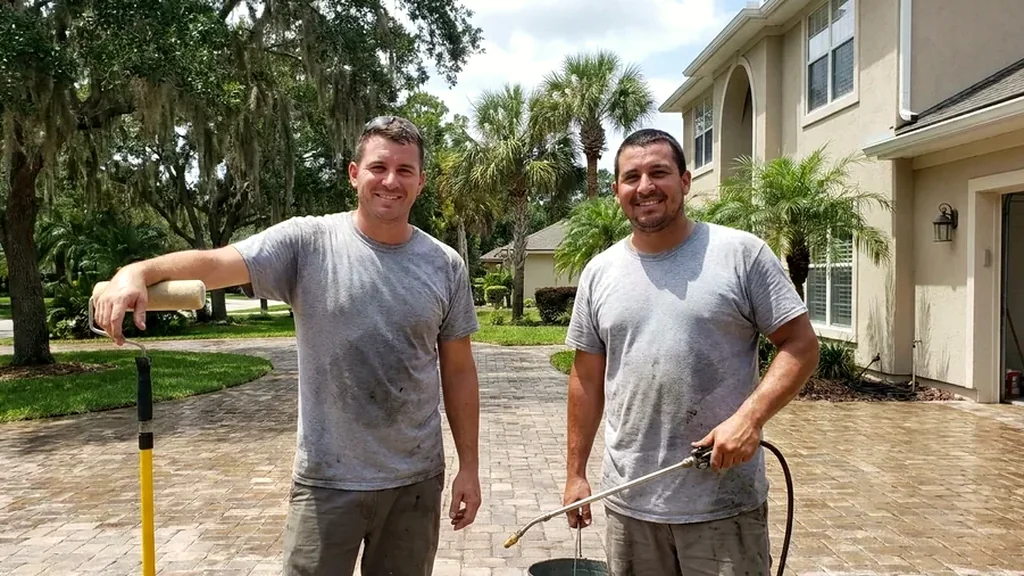
How does a paver sealing job work in Pine Castle?
Learn the history of the pavers
The contractor asks who sealed your Pine Castle pavers and when. Few owners know, so the contractor looks at the surface for peeling and patches. A water-based coat cannot go over a solvent-based one, which makes the old product the first question. Settled or lifted sections get marked, since sealer would lock them in. Photos of past repairs help, and so does any note about work done by a previous owner. Notes on past work, even a neighbor's memory, add useful clues. Old receipts, a past repair bill or a neighbor's recollection can all help narrow down what is on the surface.
Clean down to bare paver
Next the surface is washed until the pavers are clean. Weeds, mildew, oil spots and tire marks come off, and orange sprinkler marks get treated. Sealer would trap whatever is left. Older pavers may need a slower wash, and a careful contractor checks the edges beside the house and the planting beds. Rinse water is steered away from the street drain. On older pavers the contractor tests a small area first. The wash pressure is kept moderate on aged pavers so the surface and the joint edges are not damaged.
Fill every joint
Washing pulls out joint sand, so new sand is swept into each joint. Full joints keep pavers from shifting and leave little room for weeds or ants. Joints that were hollow before the wash may take two passes. The surface is swept clear before the sealer comes out. Loose sand left on top can cloud the coat, so this sweep is not rushed. Tilting or wobbly sections are added to the repair list. If tree roots have lifted a section, that spot is listed for repair rather than filled with sand.
Seal on a dry stretch
Sealer needs a dry surface. In the wet season Orlando sees strong storms almost daily, so the contractor picks a dry morning. Many pros spray the sealer and then roll it, since rolling alone can leave lap marks. Ask how the job will be done and what the plan is if clouds build. A damp corner can wait for a second pass. A morning start gives the longest dry window. Watch the sky as well as the forecast, because a small cell can build over Pine Castle in minutes.
Hand over the details
When the coat is down, ask for the product name and the finish and keep both. Walking is generally fine after a few hours, while cars need roughly a day. Look for beading water in a couple of years. Those details save guesswork at the next coat. Write them on a card and keep it with your home papers. Take a photo of the finished surface for your records. Put the finished date on your calendar so you can test the surface in a couple of years.
Complete paver services in Pine Castle
A Pine Castle job has a fixed order: wash, re-sand, dry, seal. The order matters, because sealer on a dirty surface locks the dirt in. Each step takes a different amount of time on a short drive than on a long one, and a back patio adds its own hours. To ask what each step would take at your home, call (689) 285-2720.
Most surfaces here are front drives, entry walks and back patios. Drives take tires and oil. Walks pick up weeds in the joints, and patios hold leaves. List yours when you book your free estimate, and the contractor will give a plan for each.
For sealer, you choose a finish and a base. A wet look deepens color and helps hold sand, while a natural finish adds little color and can last longer in shade. If a past coat is solvent-based, a water-based one cannot follow it. Call (689) 285-2720 to talk through the choice.
Timing follows the weather. Orlando averages about 51 inches of rain a year, and most of it falls from June to September. The drier months from November through April make dates easier to keep, and a booked date in those months rarely needs to move. To see which weeks are open, book your free estimate.
Questions to ask before you hire
- Does the written estimate list the prep, the sealer and the number of coats?
- How do you treat the green algae in my shaded corners?
- How do you get the orange rust stains from my sprinklers out of the pavers?
- Do you put new sand in the joints after the wash, and which sand do you use?
- Who pays if sealer lands on my windows or garage door?
- What happens if my old sealer is peeling or cloudy?
- Is the sealer safe around my pool water and my plants?
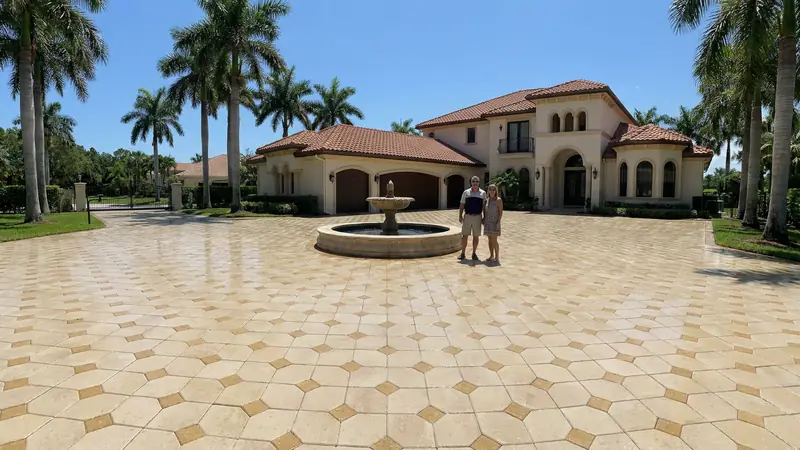
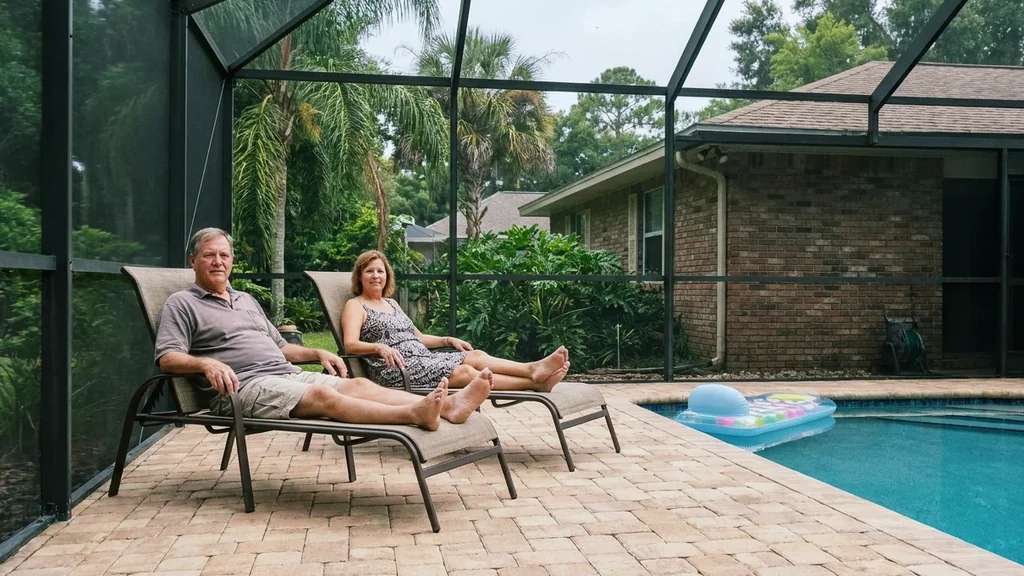
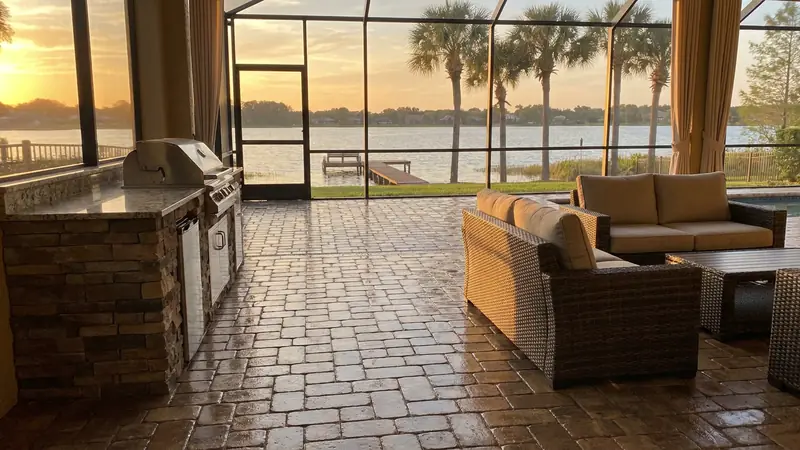
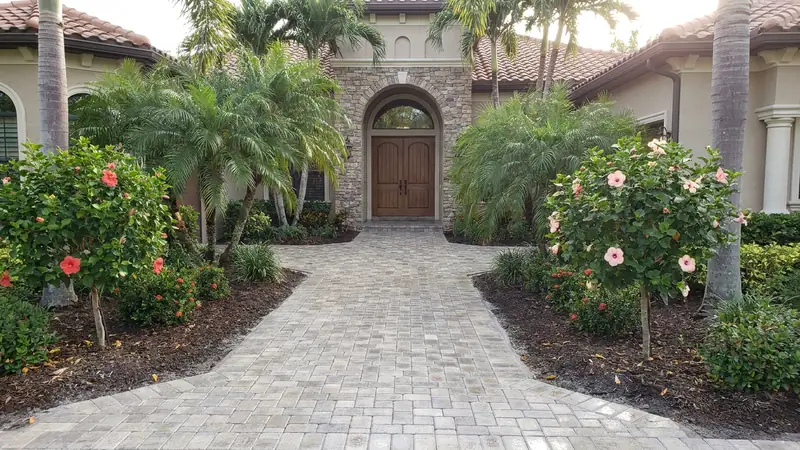
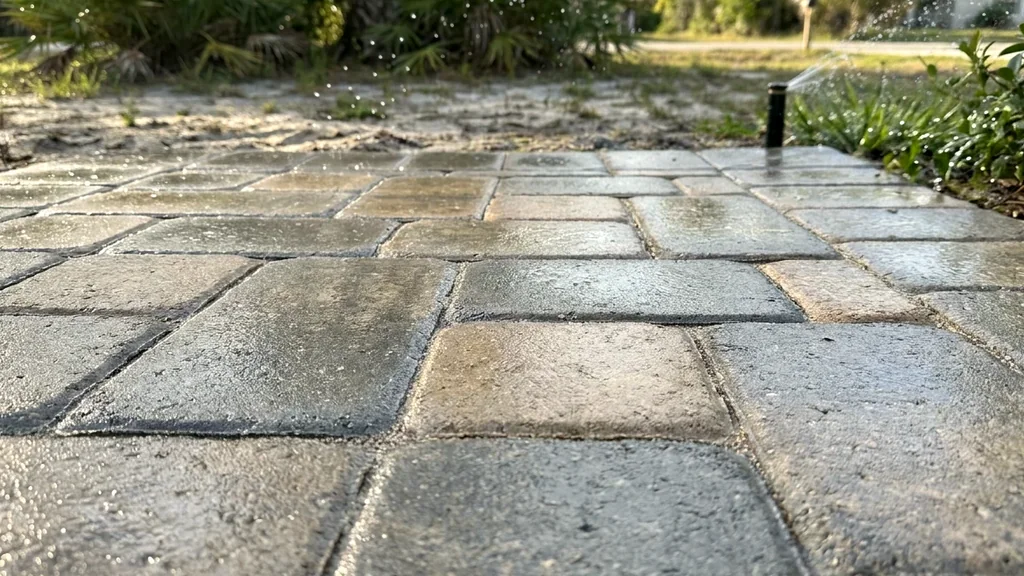
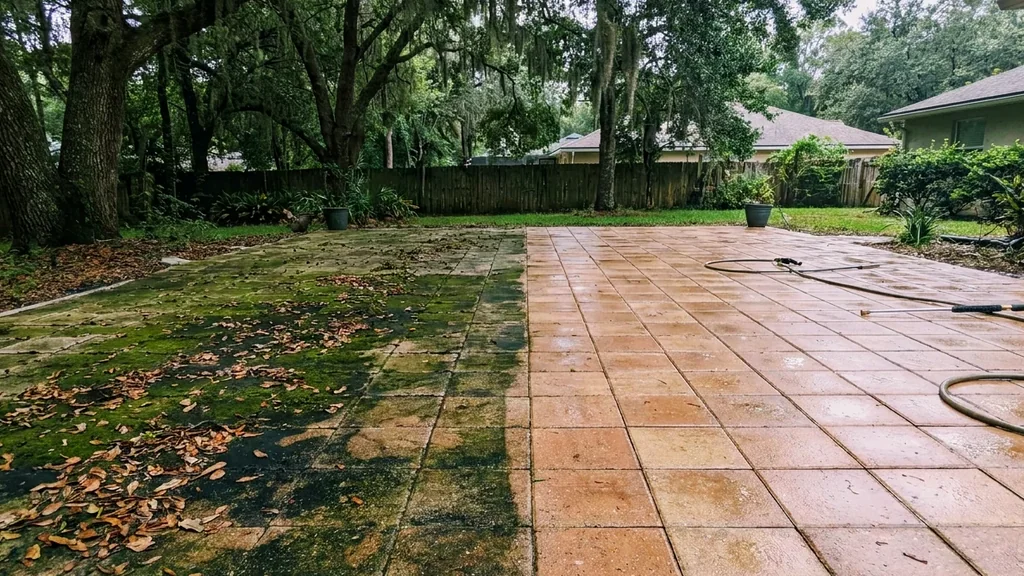
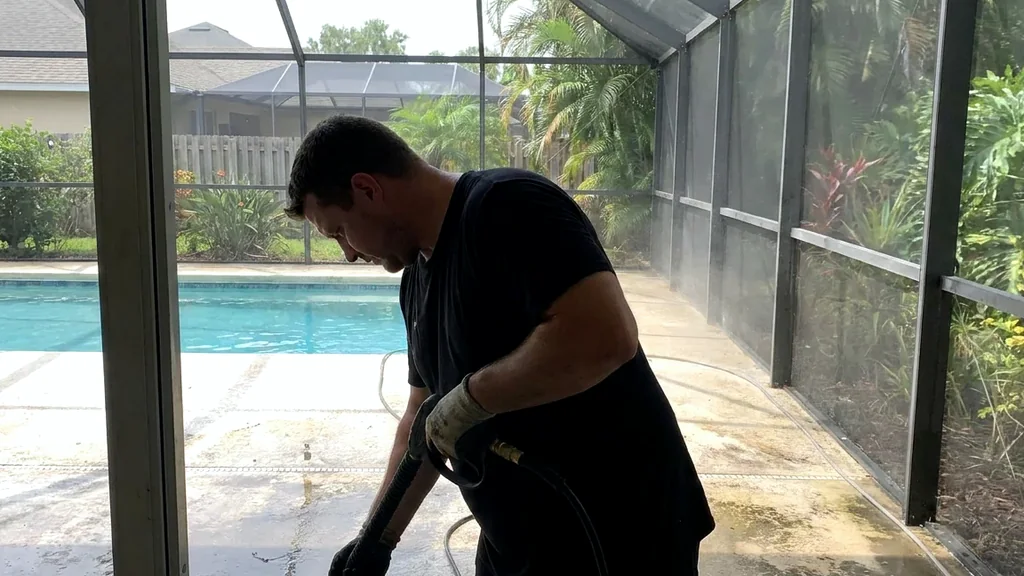
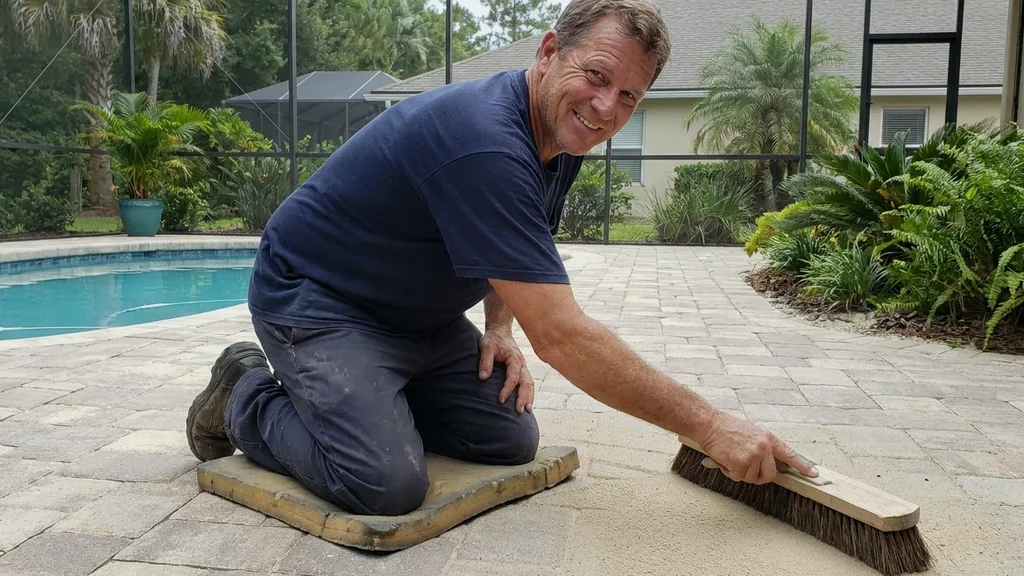
What do sealed pavers look like around Pine Castle?
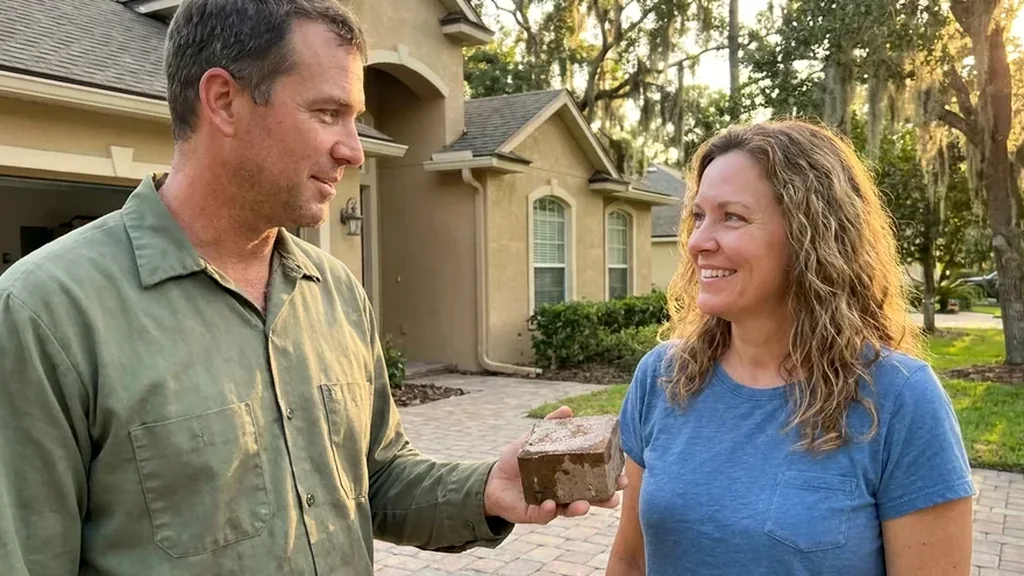
Why local matters in Pine Castle
A contractor who works around Pine Castle knows the area is old, and that old drives hide surprises. The old coat, the settled paver and the empty joint all show up often. Someone from outside may not look for them, and that leads to a coat that fails early. For a contractor who works the Pine Castle area, call (689) 285-2720.
Timing and traffic are part of local knowledge too. Pine Castle sits near Orange Avenue, Sand Lake Road and the airport, so roads can slow a day. A contractor who knows the area plans arrival times with that in mind. You can book your free estimate and ask about scheduling.
Many homes here are modest in size, so the work happens close to the street and the neighbors. That calls for care with rinse water and with where the van is parked. A contractor used to tight spaces handles both, and gives you a plan before the day starts. If your lot is small, call (689) 285-2720 and say so.
What makes Pine Castle different from the rest of south Orlando?
Settlers arrived in 1870, and trains on the South Florida Railroad mainline were rolling through before 1882. The line later passed to the Plant System and then the Atlantic Coast Line. Amtrak bypassed the local depot in 1971, so passenger trains left town for decades. If your street runs near the old rail line, book your free estimate and say so.
Pinecastle Army Airfield opened in 1940, became McCoy Air Force Base in 1958 and later grew into Orlando International Airport, about two miles southeast. SunRail's Sand Lake Road station opened in 2014 at 8030 South Orange Avenue, with 429 parking spaces. Whichever landmark is closest to you, call (689) 285-2720.
Frequently Asked Questions
How long does paver sealing last in Pine Castle?
Plan on two to five years before the next coat. Wet-look drives run about two to three years between coats and natural-finish patios three to five, a Central Florida company says. A sunny Pine Castle drive may need its next coat sooner than a shaded back walk. A water test each spring shows where you stand.
What is the average price for paver sealing in Pine Castle?
Expect $1.50 to $3.00 per square foot to clean, sand and seal, the range posted by Central Florida companies. The total follows the area and the condition of the surface. A free estimate gives you a number for your Pine Castle pavers. Get the measured square footage in the quote.
Is it better to spray or roll paver sealer in Pine Castle?
Both, usually. Spraying lays the coat down evenly and a roller works it in, as one Jacksonville company describes it. That company notes a roller by itself can leave lap marks, so ask how your drive will be done and get the product name.
What happens if pavers are not sealed in Pine Castle?
Color goes flat and chalky, and joint sand washes away. A Jacksonville company says pavers can then loosen and settle, and that weeds, ants and dark mildew can take hold. Oil and tire marks are also harder to remove, so a drive that goes years uncoated tends to look worn. A fresh coat slows all of those changes. A fresh coat slows each of these changes.
Can sealer go over old sealer on Pine Castle pavers?
Sometimes. The old coat decides what can follow, and a water-based sealer cannot go over a solvent-based one. In an older place like Pine Castle the history may be unknown. Share any product name or receipt, and the contractor will test the surface and read how the old coat behaves.
Do sunken pavers need repair before sealing in Pine Castle?
Yes. A Jacksonville company says sealing locks in existing problems, so settled or lifted sections should be fixed first. Older Pine Castle drives may have dips from years of tires. Point them out at the estimate so the repair can be priced in. Repairs done first keep the new coat even across the surface.
Which finish suits an older Pine Castle home?
It depends on the look you want. A wet look deepens color and helps hold sand in the joints, while a natural finish adds little color and can last longer in shade. Ask to see both on a sample before you decide. A sample on a spare corner of your own drive shows the real color in your own light.
How do I know my Pine Castle pavers need sealing again?
Signs of a worn coat: chalky color after a rinse, joint sand washing out, and water that darkens pavers instead of beading. A Central Florida company lists these signs. If you see two or more, a free estimate is a good next step, and it shows what the job would cost. Photos taken a year apart make the change easy to see.
Do the airport and the rail line near Pine Castle affect a sealing job?
Not the sealer itself. Orlando International Airport sits about two miles southeast and SunRail stops at 8030 South Orange Avenue, so some mornings run busy. The contractor plans arrival times around traffic. Give your cross street when you call so the visit is timed well.
Will sealing stop weeds in the joints of my Pine Castle pavers?
It helps slow them. Washing removes what is growing, new sand fills the joints, and sealer holds that sand in place. A Jacksonville company says lost joint sand is what lets weeds, ants and mildew take hold. Joints still need a look each year, since sealer wears down.
When is a good time to seal pavers in Pine Castle?
Pick a stretch of dry days. Orlando has a drier, milder season from November through April, and the wet season brings storms almost daily from May to late October. Sealer needs a dry surface, so a contractor may move your date if rain builds.
How soon can I walk or park on sealed pavers in Pine Castle?
People can usually walk on the surface within a few hours, according to one Jacksonville company. Cars need to stay off for about a day, depending on product and weather. Your contractor will know the wait for the product in use.
Ready for a Free Estimate in Pine Castle?
Call (689) 285-2720 and tell us about your pavers.
Free, no obligation